16.5.14

Aloneness project with Ryan Ormonde

ALONENESS

FICTION AND MEMORY

OBSERVING A RITUAL vs. OBSERVING BEHAVIOUR

ESTABLISHING A GEOGRAPHICAL NETWORK FOR THE BODY

PERFORMING THE REAL THROUGH A FICTIONAL CHARACTER


Two poet-artists, Ryan Ormonde and Karen Sandhu, explore ideas of 'aloneness' in a parallel practice of research and development.
For Ryan 'the intention is to establish a geographical network for the body in a practice of aloneness' - a post-Situationist activity of 'silent poetry' that in itself takes the form of discovering and remembering an area local to my home. This practice is retrospectively documented in writing in the form of a journal.
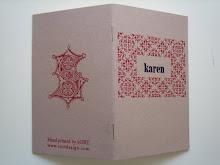
For Karen, 'the project is intended to be a performance performed through a fictional character but based on the experiences of the real'. Her character 'in the eyes of society, is a normal individual. However, society does not know that every day she is performing.' Karen's documentation will take the form of a series of visual images and sound recordings and a book work.
RYAN ORMONDE
The site for this practice is an area around my home, its boundaries defined by the time it takes to walk from my home and back again within the daily timeframe, incorporating resting times of any duration and walking routes that may turn any which way. The daily timeframe is a four hour block from 9am to 1pm and a three hour block from 2pm to 5pm. This constitutes one day of the practice.
At first the activity of this practice is an act of discovering and remembering. No methods of documentation are used beyond body memory, but after a day is completed a journal entry is written. The objective is to cover the entire available public space. Every potential route and resting place is to be found and remembered. The intention is to establish a geographical network for the body in a practice of aloneness.
Once this network is acquired the practice continues and develops informed by the following questions:
What do you do in aloneness?
Or
What does aloneness do?
KAREN SANDHU
A.Lone, in the eyes of society, is a normal individual. However, society does not know that every day she is performing.
A.Lone completes numerous everyday tasks on her own:

1. Brushing teeth 2. Getting dressed 3. Eating porridge 4. Reading  5. Walking to the bus stop 6. Picking groceries 7. Writing 8. Cooking dinner 9. Editing 10. Sleeping 
A.Lone is a fictional character devised for the purposes of this artistic practice. The character provides the space through which I will perform the concept. All tasks will be timetabled, completed, recorded and edited by me. The bookwork will also be written and produced by me.
This four week project will be documented through a series of visual images and sound recordings. This is to exist as film footage. Each of the ten tasks will be recorded and edited over the four week period.
The writing (one of the ten tasks) that A.Lone is to complete will be based on writing through her memories and feelings associated with each activity and will be shaped by her reading of source materials – factual and fictional –  based on the ideas of others on the subject of ‘alone’. These source materials will be selected throughout the four week period. The writing to come out of this will be documented as a bookwork which engages directly with the film. Consequently after its performance, the project is to exist in the form of both film and bookwork. Each being referential to each other.
The A.Lone Project is not about indulging in the notion of being separate, independent or different from others; nor is it about exploring the idea of loneliness, a feeling often associated with the word ‘alone’; nor is it fuelled by self-obsession; rather the project stems from the artistic technique of ‘defamiliarization’ and enhancing one’s perception of the familiar. However, to go beyond this 20th century idea, the project is intended to be a performance performed through a fictional character but based on the experiences of the real. It blurs the lines of fact and fiction which is also the very nature of the source material to be used as part of the project. It intends to provoke the following questions:
In order for the everyday to be ‘defamiliarized’ in an already exaggerated 21st century, does the ‘real’ need to be presented as ‘unreal’?
Or
Does the everyday need to be fictionally distorted or exaggerated in order to experience it anew?


14.6.10

Ulises in the UK

"Gossip, Scandal and Good Manners"

book/video/installation works by Ulises Carrion

12 June - 26 June 2010

The Showroom, 63 Penfold St, London (opening hours: Wed - Sat, 12 - 6pm)

Curated by the first year MA Curating Contemporary Art Students at the Royal College of Art in collaboration with Martha Hellion.

20.4.10

The Blue Notebook, Vol. 4 No. 2

The Blue Notebook: Journal for Artists' Books
Volume 4 No 2 April 2010

is now available here!

It includes essays and reviews that explore and examine the artist's books and is accompanied by conceptual artwork housed on its artists' pages.

It also includes a more thorough write-up of the ICA seminar the idea as book : the book as idea, which I briefly outlined here in July.

28.3.10

first day of spring

It's official.
British springtime is here.
I found it on my window ledge.

The Brownies' Book Set


Today I re-found my Brownies set of little books by Palmer Cox. The books include: The Brownies' ABC Book, The Brownies' You Can Count Book, The Brownies' Joke Book and The Brownies' Song and Dance Book. Many primary school hours were spent reciting jokes and
rhymes from these little pages.

The Properties of Paper

In my last two projects I've been working with all kinds of paper but I don't really know much about it, I mean about paper and its properties. So before embarking on the projects, I took some time out to get to know the page.

In both of my bookworks the materiality of the paper used plays a significant part in conveying the concept. The covers are either partly or fully made out of Rag Paper, which has a fabric-like quality. Rag Paper with a weight of 210 grams per square meter was chosen specifically for the front and back covers of Elmer’s One-Day Project. This is because of its strength, which makes for a sturdy cover and at the same time its malleability, which enables the cover to be embroidered with ease.

At 230 g/sm a heavier type of Rag Paper was used for the interior of the concertina, I PATCH, which not only holds up the folding-out structure but also achieves an interaction with the typewriter, for example, on close inspection Rag Paper, like fabric, has a woven quality and therefore a textured surface, a surface that is raised and dipped so that any text printed onto it undergoes ‘texturisation’ by either falling into the dips or sitting on the surface. Thus, the paper affects the outcome as it allows for the stamps of the typewriter to just kiss the surface rather than indent or engrave, the kiss sometimes leaves behind a bold letter and other times a fading outline. This points to the physicality of mark making and the bodily gestures made by the artist, again pointing to the concept of the book as a record of its own making.

The materiality of the page has been experimented further in Elmer’s One-Day Project with the inclusion of Lamali Paper, which consists of stencilled and painted prints. Therefore, unlike Rag Paper, the embossed patterns on Lamali provide a raised surface, which creates interesting results with the typewriter, as it cannot always mark these painted areas. On the other hand, Jari Paper and Nat Lokta Fibre, both at 25 grams per square meter, is semi-transparent as it is not made up of fabric but parts of cut-up thread pressed together. It is used in the same was as the plastic sheets of Hsia Yu's transparent poetry bookwork 'Pink Noise', to create a multi-layering of text. Its transparent quality means that any text typed on to the page is carried through to the page underneath. However, unlike printing onto plastic, the paper possesses its own texture and is further dented with the stamps of the typewriter.

I hope to start making my own paper soon.

22.3.10

Elmer's One-Day Project

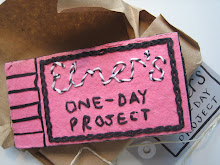
Elmer’s One-Day Project is a 12 x 6 cm book consisting of 54 hand cut pages. It is a limited edition of 5. Each book is individually handmade and bound using Japanese Stab binding. The bookwork is made of offcuts of paper from previous projects, including the concertina I PATCH. The cover is made from Rag paper with embroidered text and a chain-stitch border. The text inside of the bookwork is typewritten. Elmer’s One-Day Project has been constructed to reveal the handmade and craft skills involved in its production.


I have used a variety of paper to sew or type through in order to present these materials performing together. They not only draw attention to themselves but also the process they have undergone. Consequently, they show “work” in performance. “Work” as in embroidering, binding, folding, ripping, patching and typewriting, where the holes, stitches and stamps of the typewriter possess a sense of immediacy, a sense of something being created and unique to a particular moment. I hope that each of these processes becomes a record of production.

27.2.10

- ACCORDION - CONCERTINA - ACCORDION - CONCERTINA -
- CONCERTINA - ACCORDION - CONCERTINA - ACCORDION -
- ACCORDION - CONCERTINA - ACCORDION - CONCERTINA -
- CONCERTINA - ACCORDION - CONCERTINA - ACCORDION -
-ACCORDION - CONCERTINA - ACCORDION - CONCERTINA -
- CONCERTINA - ACCORDION - CONCERTINA - ACCORDION -
- ACCORDION - CONCERTINA - ACCORDION - CONCERTINA -
- CONCERTINA - ACCORDION - CONCERTINA - ACCORDION -
-ACCORDION - CONCERTINA - ACCORDION - CONCERTINA -
- CONCERTINA - ACCORDION - CONCERTINA - ACCORDION -


are these two terms simply interchangeable?
I've been thinking some more about Japanese methods of bookbinding.

The use of Japanese Stab Binding enables the binding to be exposed on the surface of each bookwork. I've noticed that many artists’ books by Japanese artists draw upon craft based methods, specifically working with the concertina form or with binding that is intricate yet visible to the reader.

Often they combine both of these elements to create bound concertinas or accordion bookworks. This is where all the panels of a concertina or an accordion are bound along one side using a hand-stitched method. As a result the bookwork opens like a conventional book, however, the spine is the giveaway, as is each folded edge, clearly showing the signs of a closed and bound concertina - great stuff!

18.1.10

I PATCH

I PATCH is a one-off 14 x 14 cm concertina book made up of ten panels. Each panel consists of a typewritten text in the form of a square measuring 9 x 9 cm. The front and back covers are made of foam board covered with navy Japanese Washi Paper onto which is sewn sixteen hand-stitched squares. Inserted in between the foam board and Washi paper is wadding for a padded effect to create the illusion of a patchwork quilt. Each panel of the concertina consists of handmade paper joined together with a strip of paper measuring 1.5 cm in width. Each side of the strip is hand stitched to one side of two panels. This strip is the bind as well as the fold, which creates the extendable concertina structure. The book is packaged with a pink satin ribbon.


The form plays a part in conveying its concept, as the concertina form draws attention to the craft element of the bookwork through the use of hand stitching. This particular bookwork looks to tie in all elements of book form, which includes the physical form of the object and the form of its content. The squareness of the bookwork both outside and in is made to resemble the square patches of fabric to be found on a patchwork quilt. The title, I PATCH, is not only reflected in the patchworks of the front and back covers but also in the square patches of text within the bookwork. The text is laid out in the form of a square block of text, which visually marks a square patch. It is surrounded by a white border, which further draws attention to the squareness of the text and the object.

The exposed stitch work and binding, hand-cut panels and typewritten text are each a record of production. Stitching and binding are a record of the craft methods employed during the making of the book. The unevenness of hand-cut panels marks the process of production, as does the use of a manual typewriter. The typewriter is a particularly interesting instrument to use as it stains the page with not only letters but also accidental streaks from the ink ribbon. As a writing device it is successful in capturing all the elements of a production process, as mistakes cannot be erased and rewritten. As a manual device the markings are reliant on the artist using it; depending on the pressure placed on the typewriter keys, some letters will imprint the paper darker than others. Equally, each page is fed into the typewriter by hand which means that some words may appear out of line with others. Each of these aspects captures moments of making and to borrow Ulises Carrión’s term; the bookwork becomes ‘a sequence of moments’.

The content is a crisscrossing dialogue between the artist, the book and the reader. It is a dialogue that records the thought processes in those moments of production. Therefore, in the same way that the book form has been constructed as a record of a production, the content also documents aspects of this process. However, instead of a physical record, the text is a mental note that taps into the psyche of the artist at the time of production, to create a bookwork that captures these external and internal processes of making.
Until now there has been no activity on this blog - only there has been some activity, just not on blogger. During this time there's been some book making, amazingly just in time for the what-it's-september-already-i-need-more-time September deadline.

8.10.09

Pop-Up Letterpress Studio


For one week in September 2009 there was a letterpress machine available for public use at 'the maker-difference pop-up letterpress studio' by Cockpit Arms and SORT in Newburgh Quarter, Carnaby Street. I got to use a letterpress for the first time and printed text on to a lovely little book, courtesy of SORT. The letterpress man was friendly and extremely helpful and told me that sometime in the near future SORT plan to run letterpress workshops from SORT HQ! Excellent news!

18.8.09

So I'm having to consider what I mean when I say "artist's book".

Today I'd like to think of it as
when the book as subject is the art rather than when the subject of the book is art.

15.8.09

Recently there have been some interesting finds in my mailbox. This is rare.

Last week came a note that read:

you look like a blade of grass with 4 incisors sticking out of the sides. it has no legs, so it obviously hops around with no feet. This means that balance is an issue, but it's fine, because this is kept constant by its own homeostasis system. It never falls over, but it can do. If it does, it has to wait for the wind to push it back upright again. This can be quite troublesome in the summer, when wind is at a minimum. It has no arms because its a blade of grass so when it wants to eat, it must turn to the side and use its incisors to mash up food, it then lies on the food, and then the necassary nutrients enter the blade of grass by diffusion and osmosis through the partially permeable memebrane that forms the outer layer of the blade of grass. It has a small brain positioned just behind its bottom left incisor. the end.

Yesterday came this:


It's the latest publication from the WET INK PRESS. A book for John Sparrow. Put together and bound by Becky Cremin with contributions from all at WET INK HQ.

8.8.09

Yesterday I bought an old Victorian Flat Iron. I've been looking for one for a while now. Despite not being fond of laundry I can't wait to use it.

I've been reading up on the Flat Iron and apparently Flat Irons were used in pairs so that one could be used whilst the other was being heated up. As one iron started to cool it was switched for the other. The irons were either placed face up in front of open fires on stands known as trivets, or they were suspended over the fire using hangers. So I guess I need a pair before I can really start using the Flat Iron. The laundry will have to wait! Just until I find another one which may be a while as this one was hard to come by.

31.7.09

The Idea as Book : The Book as Idea

I've been meaning to do a write-up of a seminar I chaired at the ICA earlier this month in association with MA Poetic Practice, but I've been putting it off as my transcript is sketchy with a lot of gaps. The seminar entitled, The Idea as Book : The Book as Idea, took place on the 14th of July and looked to interrogate the artist’s book in relation to ideas of conceptual art and concrete poetry. It was part of a series of events tying in with the current exhibition Poor. Old. Tired. Horse. which takes an imaginative and expansive look at text-based art practices from the 1960s to the present day.

The aims of the seminar were to explore the limitations and the potential of artists’ books with regards to the book as space, the book as self-reflexive, the book as performance and the book as process. It drew upon past and present examples of book art, conceptual art and concrete poetry in order to foreground the ever deepening cross-over between these art forms. Members of the panel included Redell Olsen, Allen Fisher, Mark Pawson, Elizabeth James and Kate Gallon.

The following was discussed: "Space" as public and private and the 2D/3D relationship between a work and how you view it. The social formations thought to be missing from the show. Typewriter works looking old-fashioned yet possessing a nostalgic quality. Redell Olsen referred to Lilian Lijn's 3D sculpture, Sky Never Stops, as a type of book, a "cone book" in fact. Like a book it invites the viewer to read it but in a way that requires the viewer to be aware of his/her own physical presence as well as the presence of the moving cone. Both object and viewer are moving and participating. We talked about books not only referencing spaces/sites but via their materiality they can very much hold a site too. I guess an example of this would be Dieter Roth's Daily Mirror. The "preciousness" of the art object was also brought up and in particular the issue of allowing artists' books to be handled. Suggestions about their display and distribution were also made. Ed Ruscha's Information Man was mentioned but I can't remember in what context.

If I were to take one thing away from it, it would be the concept of space in relation to the book, that is, the book as an object made up of pockets of space as well as the book as an object occupying a space. Some did say that they didn't think it useful to discuss the book and space, but I'm interested in Ulises Carrión's play with space in relation to the book. It's potential is limitless and that's not just in conceptual terms but in actual physical terms. How people choose to use the book is obviously interesting as is the space in which it is made and then stored or displayed. During the discussion Allen Fisher pointed out Carrión's book Tell me what sort of wall paper your room has and I will tell you who you are, a book that comprises of a selection of wallpaper pieces with labels such as 'Living Room', 'Bedroom' and 'My Friend's Room' overprinted onto each page. Each page references an external space collated into the space of one book. Carrión moves you from space to space / place to place, each individualised as the reader turns the page and feels the uniqueness of the textured wallpaper. I think it's important to bring up Carrión's work as concrete and visual poetry did play a part in his break with literature in a more traditional sense. He also emphasised the close relationship between poetry and artists' books, insisting that poets were responsible for opening up the way to such bookworks.

A big thanks to the panel and everyone who came and to those who helped and read and re-read my list of questions just days before the event.

10.7.09

Tonight we performed EVERY DAY A BATTLE and we're lucky enough to do this in the impressive Mosaic Rooms.

There was film, a tape recorder, paper cuffs, moving paper structures, entangled paper rope, a list of names on a ream of paper splitting the room in two, bookmaking, books to read, envelopes to open and generally lots of words and actions to respond to. We tried to incorporate each medium and the different aspects of performance. It was all about remediation, translation and the evolution from one state to the next. Not just revealing a finished state but the process involved.

During the performance I made books to be distributed and to be read/performed at the end of the performance. Some weeks ago we all met in Earl's Court to gather and make material which was recorded and would be remediated through performance tonight. In Earl's Court I was filmed making books filled with material provided on the day. Tonight I continued to make these books, however, they were filled with the material circulated during the performance, which was in itself remediated when read at the end of the performance.

Below is an example of the books made. On one side is a map of the Earl's Court area, on the other side are words taken from tonight's performance. The books were made using a sheet of A4 paper cut and folded and placed in a translucent folder.

My aim during the performance was to just make, that was to be my one and only response. However, I soon realised that with paper cuffs falling into my eye line and with moving paper structures walking round me and with language being exchanged in every direction it was impossible to remain transfixed on making. I was naturally encouraged to contribute to an energetic space of words by vocalising my own.

For me the success was that the performance was able to foreground our personal interests but still come together as a collaborative. It took me back to thinking about the bookmaking day and stealing Perree's term "cross-fertilisation" - we were combining individual work, ambitions, dialogue and exchange in the same time, place and moment.
Becky's documented it all with her camera here.

WET INK and Scenery Chewer Present ‘Every Day A Battle’

Place: Mosaic Rooms, 226 Cromwell Road London SW5 0SW

Time: Saturday 11th July from 6.30 pm to 8.30 pm.

£5 – All proceeds to go to charity.

We seek, for an evening, to revisit the notion of Earls Court as cultural battleground. This event takes inspiration from Peter Barry's book Poetry Wars: British Poetry of the 1970s and the Battle of Earls Court which uncovers the 'battle' at the National Poetry Society during the 1970s between radical and conservative factions. Thirty-five years after Eric Mottram heralded a 'British Poetry Revival', the question of how to negotiate with the poetic mainstream still infiltrates choices made in the everyday practice of many emerging poets. We present the work of several new poets and hope they will be joined by some of the leading figures of this historical moment to revisit the scenes of an important struggle for creative freedom.

8.7.09

Tonight we performed RHYTHM CITY DREAM SURRENDER. It's the first time we've performed something for the second time. I think it went well. We were thinking a lot more about us and space and how we use it and move through it and respond to it.

Anna is DREAM and her Anna-Grams are lined up against one wall which she reads aloud as she walks back and forth.
Becky is CITY and she stands transfixed, a central point reading her city-(sound)-scape.
Ryan is SURRENDER navigating his response to the word in and around the room.
I am RHYTHM keeping a constant beat with a tapping shoe and moving in relation to the sounds around me.

We each fill the room with sounds and words that stop, start and restart in relation to what we each hear, responding through volume, tone, repetition and movement. Our physical presence occupies the space through physical means.

The physical sounds of the city perhaps... dragged in, prodded, roughed up and shaken and then dragged back out with us.

WET INK perform RHYTHM CITY DREAM SURRENDER at Spoken Space


Yep, that's 6.30 tonight
The Simpson Room in Waterstones, Piccadilly
London